
Medical Copper Tube
Medical copper tube is not ordinary copper tube. The difference lies in its internal cleanliness and how it is produced and handled, because what passes through it reaches the patient's lungs directly. This guide explains why copper is chosen and how it must be handled on site.
Why copper?
- Chemically inert towards medical gases.
- Does not shed particles or contaminants under normal conditions.
- Withstands working pressures and can be formed and jointed accurately on site.
- Smooth internal surface reducing pressure loss and easing purging.
- A long, proven track record in medical gas applications.
What "degreased" means
Medical tube is internally cleaned of residual manufacturing oils and greases, then capped and wrapped until installation. The reason is twofold: preventing contamination of the gas reaching the patient, and keeping combustible material out of an oxygen line. Ordinary plumbing tube does not meet this requirement however clean it looks externally.
Site handling and storage
- Keeping end caps on until the moment of installation.
- Dry, enclosed storage away from dust and oily materials.
- No oils or lubricants during cutting or forming.
- Clean tools dedicated to medical gas work.
- Re-capping any incomplete end at the end of each working day.
Jointing and brazing
Joints in medical gas pipelines are made in a way that preserves the internal cleanliness of the joint. Disciplined practice includes purging the tube with inert gas during brazing to prevent internal oxide scale, because that scale later breaks loose and travels with the gas to terminal units and medical devices.
Work is carried out by technicians trained specifically in medical gas installation, and joints are recorded in the installation log.
Common installation mistakes
- Using ordinary plumbing tube instead of medical tube.
- Leaving open ends inside the building during construction works.
- Brazing without an inert purge inside the tube.
- Inadequate support leading to joint stress over time.
- Missing identification, making later maintenance and testing difficult.
Frequently asked questions
Can ordinary plumbing copper tube be used?
No. Medical gas tube is supplied internally clean, capped and dedicated to this use; that condition cannot be replicated by cleaning on site.
What happens if dust or moisture enters the tube?
Contaminants travel with the gas to terminal units and devices, can cause purity tests to fail and force a full re-purge of the network — expensive and slow. Prevention here is far cheaper than remedy.
Related products
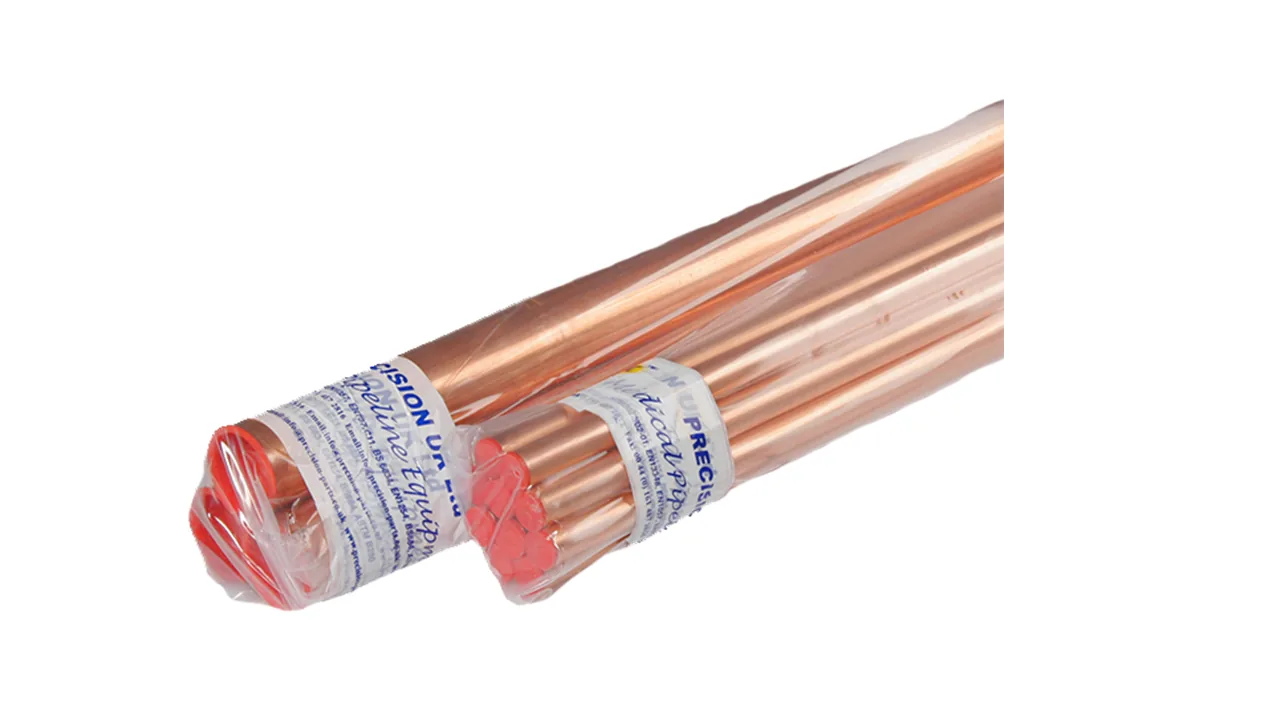
Medical Copper Pipes & Tubes for Medical Gas Systems
Degreased, capped medical copper pipes and tubes for medical gas pipeline systems.
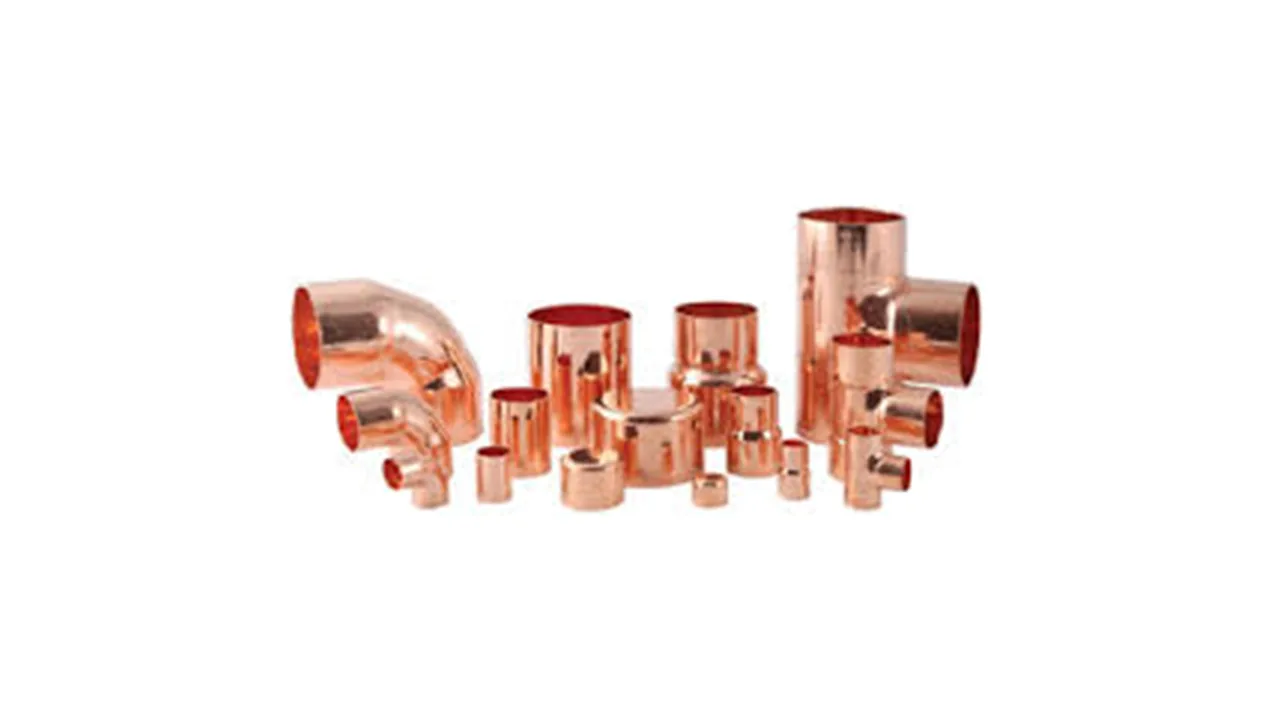
Degreased Medical Gas Copper Fittings
Degreased medical copper fittings for brazing medical gas pipelines.

Medical Pipeline Accessories
Support, protection and identification accessories for medical gas pipelines.
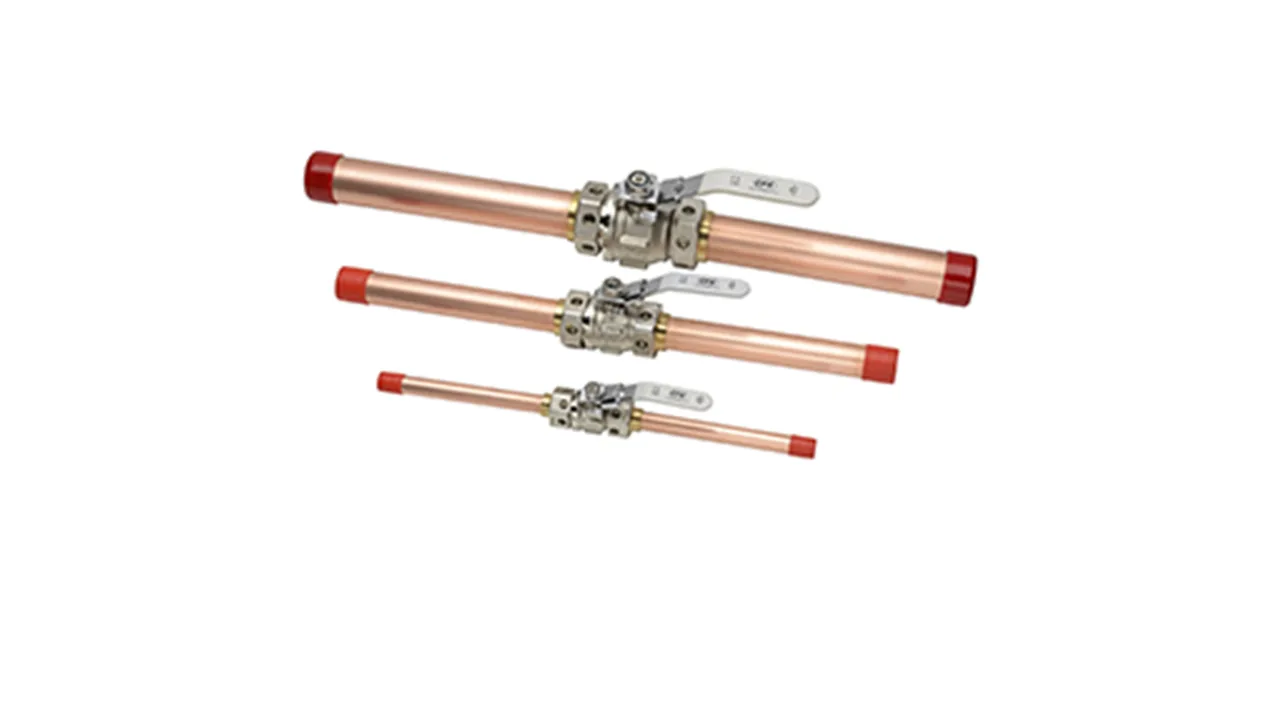
Medical Lockable Line Valve
Lockable medical line valve for isolating medical gas pipeline branches during maintenance and emergencies.
Related services
Related articles
Medical Gas Pipeline Design
A design methodology for the Medical Gas Pipeline: from load calculation and zoning to routing and isolation points.
Medical GasesMedical Gas System Testing
The pre-handover test sequence for medical gas systems: pressure and leak, cross-connection, purity, flow and alarms.
Medical GasesWhat Are Medical Gas Systems?
An engineering overview of a hospital Medical Gas System: sources, pipeline, control and terminal units.
Medical GasesMedical Oxygen Systems
Medical Oxygen sources — cylinders and manifolds, liquid oxygen tanks and generators — and how the right source is selected for a facility.
Have a project or an existing facility that needs an engineering review?
Our engineering team can review your requirement and propose a solution suited to the application, the site and the applicable requirements.