
Medical Air Systems
Medical Air is not simply compressed air: it is a service generated on site and treated so that what reaches the patient is free of moisture, oil and particulates. This guide covers plant components, treatment stages and design and operating considerations.
What is medical air?
It is compressed air drawn from atmosphere, then purified, dried and regulated for use in ventilation, respiratory therapy and blending with oxygen as clinically required. It differs from industrial compressed air in that its quality, intake and distribution route are part of the medical gas system itself.
Medical air plant components
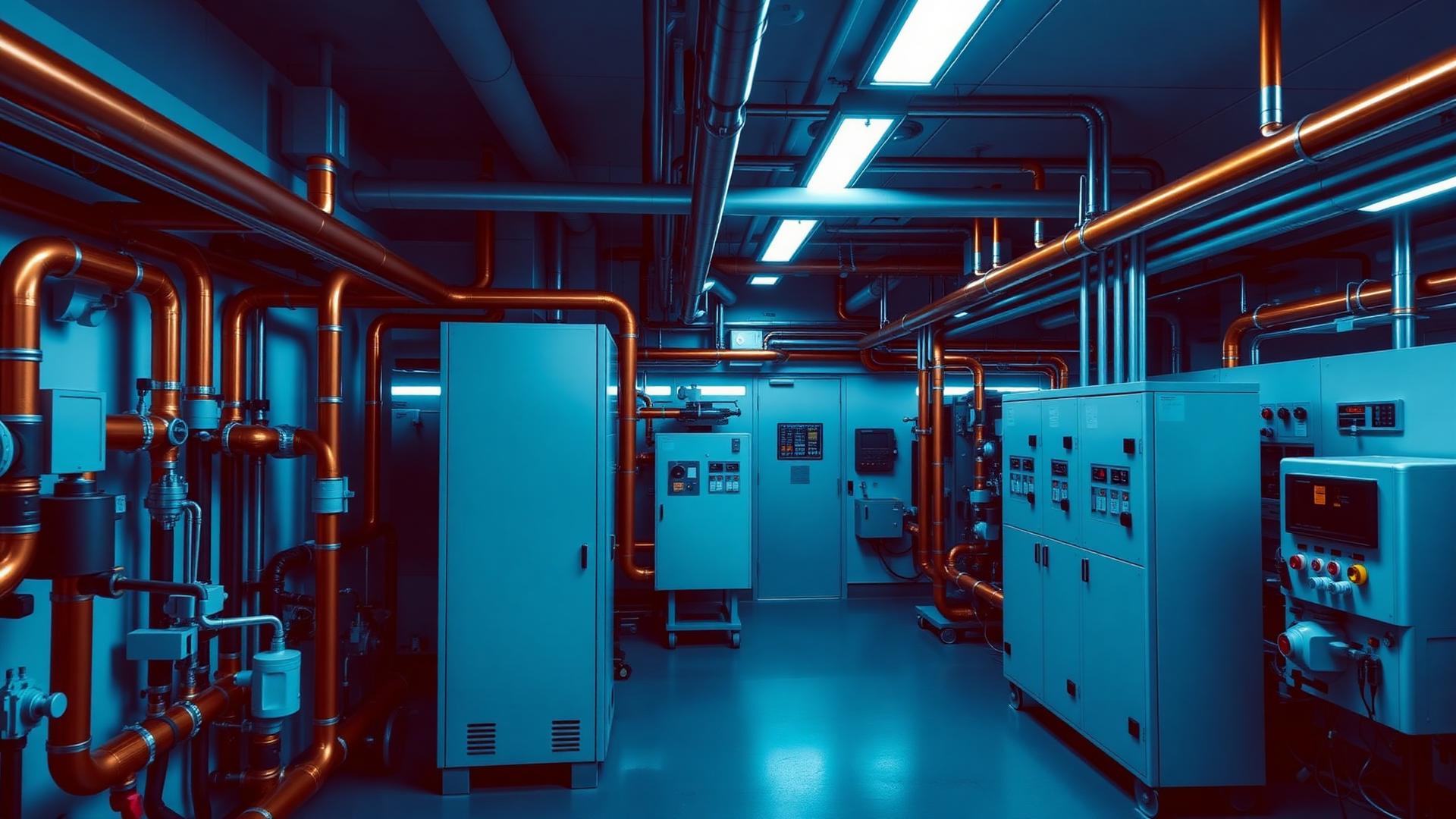
- Multiple compressors in duty/standby arrangement so one remains available during service.
- Receiver tank to smooth pressure fluctuation and limit compressor cycling.
- Dryers to lower dew point and keep moisture out of the pipeline.
- Sequential filtration stages removing particulates and any oil traces.
- Duplex pressure regulation and a plant control panel.
- Alarm panel monitoring pressure, compressor status and quality indicators.
Air intake location
Medical air quality starts at the intake. The intake must be located away from generator exhausts, kitchen flues, laboratory extract discharges and truck bays, and positioned to minimise ingress of dust and rainwater.
Applications
- Ventilators in intensive care and neonatal units.
- Respiratory therapy devices and nebulisers.
- Blending with oxygen to reach the clinically required concentration.
- Selected theatre applications depending on the facility's equipment.
Surgical Air, by contrast, drives pneumatic instruments and normally operates at a higher pressure, so it is treated as a separate service with its own pipeline and outlets.
Design and installation considerations
- Capacity sizing from the number of terminal units and a realistic diversity factor.
- Adequate plant room ventilation and heat rejection.
- Vibration and noise isolation from adjacent clinical areas.
- Easy access to filters and dryers, which are frequent maintenance items.
- Medical copper tube and fittings throughout the distribution network.
Testing and maintenance
Before commissioning the network is pressure and leak tested, verified free of cross-connection, and air quality is checked at terminal units. In operation, maintenance centres on timely filter element replacement, dew point monitoring, condensate draining, and periodic testing of compressor changeover and the alarm panel.
Frequently asked questions
Can an ordinary air compressor be used for medical air?
No. Medical air requires a dedicated plant with drying, filtration, quality monitoring and standby arrangement, plus a distribution network dedicated to medical gases.
What is the difference between medical air and surgical air?
Medical air reaches the patient as part of respiratory therapy, while surgical air drives instruments at a normally higher pressure and is designed as a separate service with its own outlets.
Why is moisture a problem in a medical air pipeline?
It causes internal corrosion, affects the performance of connected medical devices and can create an environment for contaminant growth. Drying is therefore a core stage, not an optional extra.
Related products
Medical Air Plant
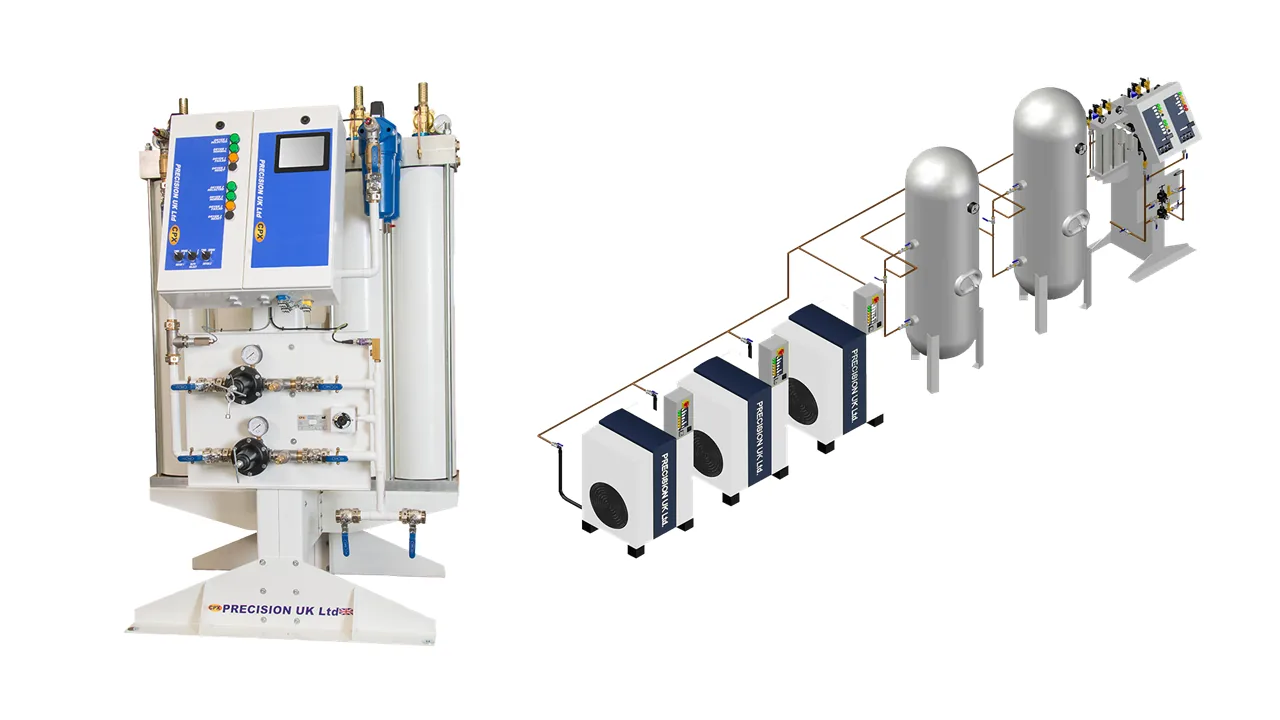
Medical air plant with compressors, dryers and filters delivering clean, dry air to the pipeline.
Medical Gas Outlets
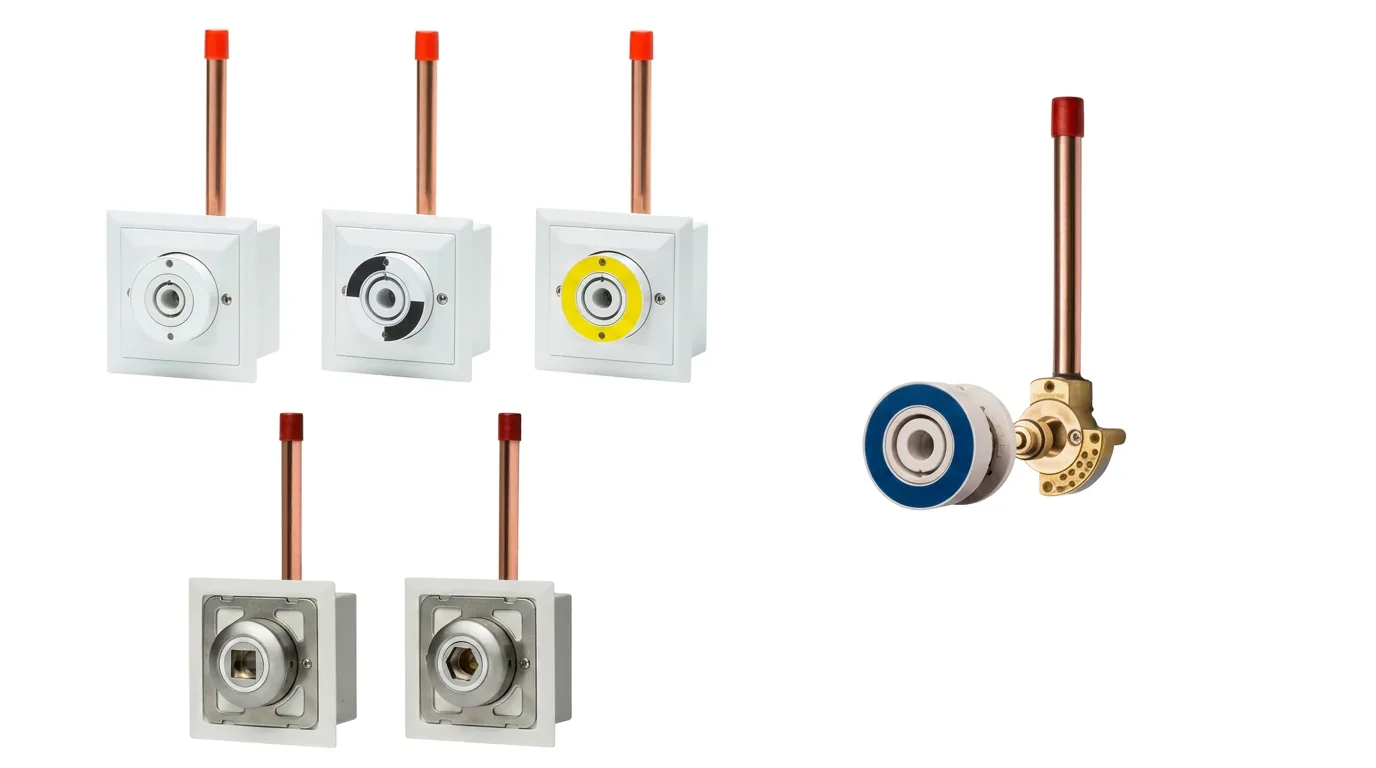
Medical gas terminal unit at the patient point with a gas-specific connection that prevents wrong connection.
Bed Head Unit
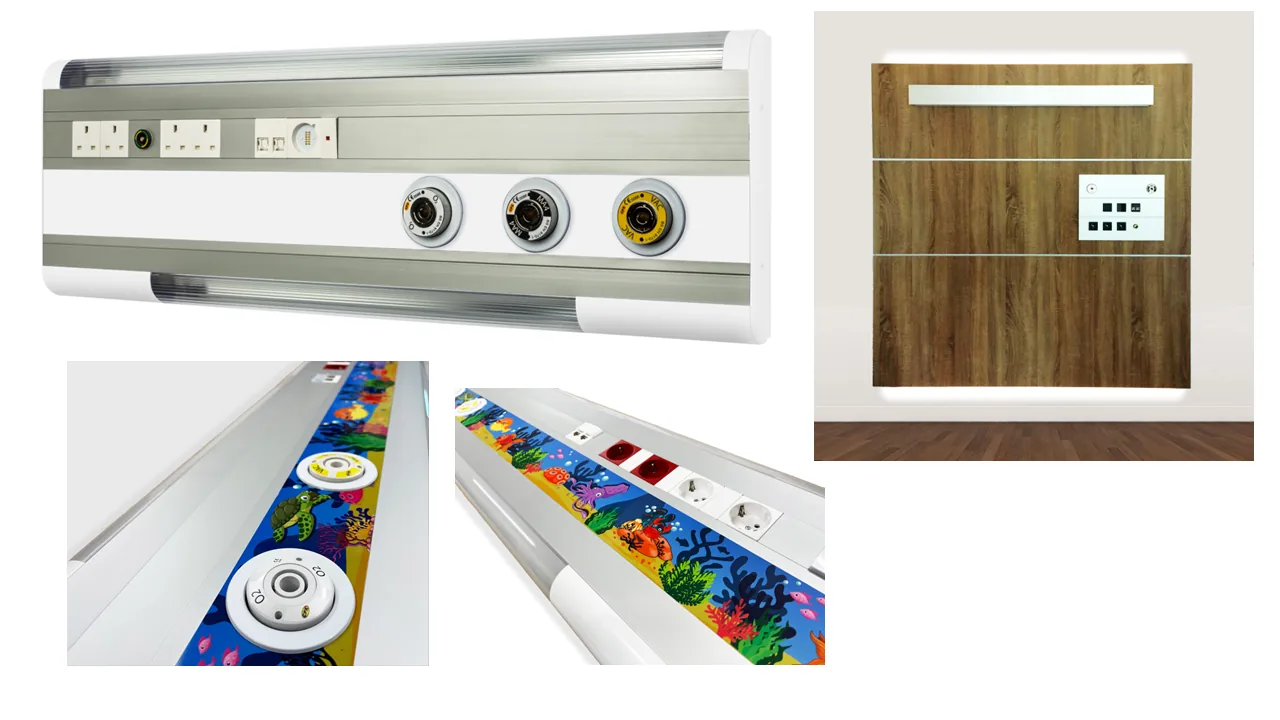
Bed head unit grouping medical gases, power, lighting and nurse call above the patient bed.
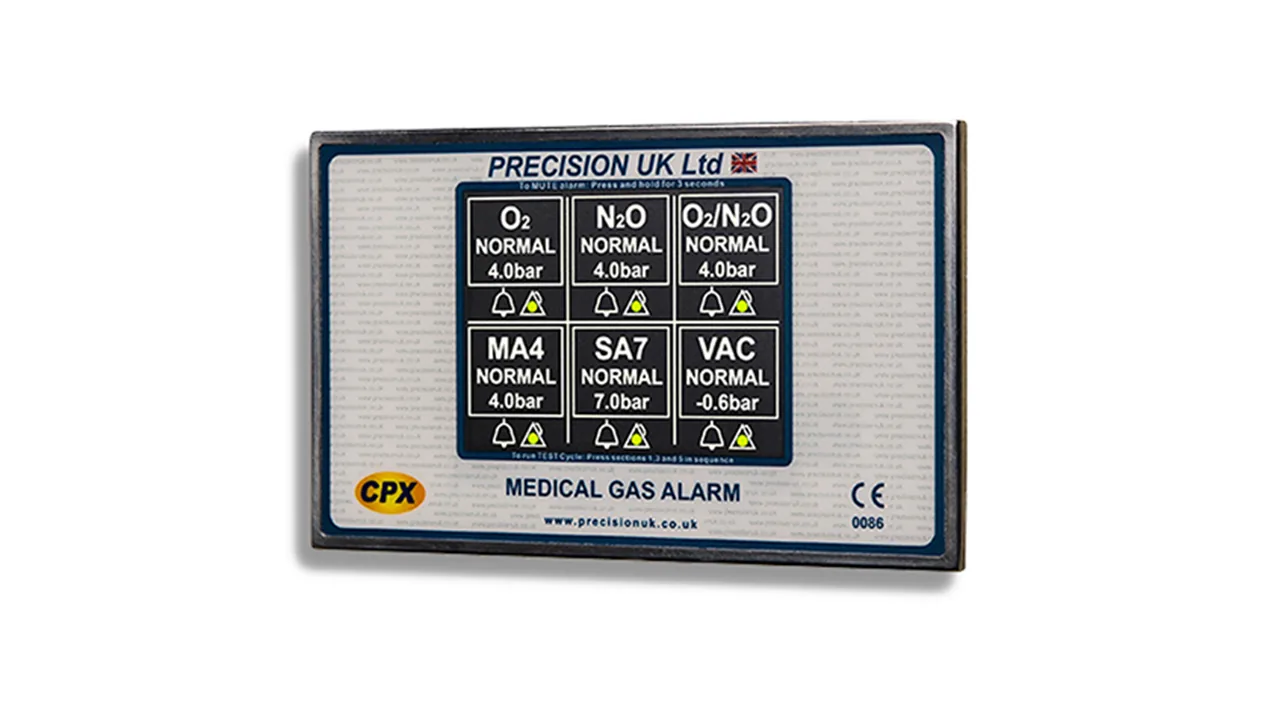
Digital Area Alarm Unit
Digital alarm panel that monitors medical gas pressures and raises alarms in critical areas.
Related services
Related articles
Medical Vacuum Systems
How a Medical Vacuum system works, and why traps, filters and the exhaust route are core parts of its design.
Medical GasesWhat Are Medical Gas Systems?
An engineering overview of a hospital Medical Gas System: sources, pipeline, control and terminal units.
Medical GasesMedical Gas System Testing
The pre-handover test sequence for medical gas systems: pressure and leak, cross-connection, purity, flow and alarms.
Medical GasesMedical Gas System Maintenance
How to build a preventive maintenance programme for medical gas systems, and what to inspect and document at each visit.
Have a project or an existing facility that needs an engineering review?
Our engineering team can review your requirement and propose a solution suited to the application, the site and the applicable requirements.